Building a pool is exciting until someone tells you it will be finished in eight weeks, while another contractor says four months. It is no surprise that many homeowners feel confused before the project even begins. The truth is that the answer depends on far more than the day excavation starts. Before your backyard changes, your project moves through design, approvals, permits, inspections, and construction. Every stage has its own schedule, and some take longer than most people expect.
If you are asking how long does it take to build a pool in Florida, the realistic answer is usually between three and six months from signing a contract to enjoying your first swim. Some projects move faster. Others slow down because of permit backlogs, weather, or custom features. This guide breaks down every stage of the timeline so you know what to expect, what the reasons for delays are, and how to keep your project moving.
Quick Summary: What to Expect 📌 Florida Pool Timeline at a Glance
|
Why Pool Timelines in Florida Often Take Longer Than Homeowners Expect
If you have been comparing estimates from different pool builders, you have probably noticed that no two timelines look the same. One company may promise completion in eight weeks, while another recommends planning for several months. Both could be accurate depending on what they are measuring.
Many advertised timelines focus only on active pool construction. They begin counting once permits are approved and equipment arrives on-site. From a homeowner’s perspective, though, the clock starts much earlier. You are thinking about the day you sign a contract, finalize your initial design, and begin preparing your property.
A complete pool construction timeline usually includes:
Design and engineering
HOA approval if required
The permitting process
Material ordering
Excavation
Structural work
Plumbing and electrical installation
Interior finish
Final inspection and startup
Every one of these construction phases depends on someone else completing their part first. A building department may be reviewing applications. An HOA architectural committee may only meet once each month. Your chosen decking materials may need to be ordered instead of being stocked locally. None of these delays happens because your contractor is standing still. They are simply part of the new pool construction in Florida.
Local conditions also influence the schedule. During the rainy season, afternoon storms can flood an excavation before steel is installed. Along the Gulf Coast, cities like Sarasota and Naples sometimes experience weather systems that push projects back several days. Around Orlando and Tampa, rapid residential growth often increases demand for inspections and permit reviews, especially during busy building seasons.
Even the type of swimming pool you choose matters. A custom concrete pool with a spa, sun shelf, and complex water features naturally takes longer than a straightforward design because every added feature introduces another installation step.
One of the most common misconceptions is assuming construction begins as soon as you sign the paperwork. In reality, your project starts long before heavy equipment enters your yard. Understanding that difference helps you set realistic expectations and makes it easier to evaluate builders who provide honest schedules instead of optimistic promises.
What Actually Determines How Long Does It Take to Build a Pool in Florida?
The answer to how long does it take to build a pool depends on several moving pieces working together. Some are within your control, while others depend on local agencies, suppliers, or Florida’s environment.
The first major factor is the design phase. A simple rectangular inground pool with standard finishes often moves through planning quickly. A custom dream pool with a raised spa, tanning ledge, outdoor kitchen, or oversized pool deck usually requires more revisions, engineering, and coordination before drawings are finalized.
Your property also plays a larger role than many people realize. Limited backyard access can slow excavation because smaller equipment must be used. Existing electrical lines, irrigation systems, or underground utilities may require adjustments before digging begins. In parts of Central Florida, rocky soil or limestone can make excavation more difficult than expected, while coastal communities may require additional drainage planning because of higher groundwater levels.
Another important consideration is the building permit. Every municipality has its own review process and workload. Some permit offices issue approvals within a couple of weeks, while others require several weeks, especially during periods of high demand. Missing paperwork or revisions requested by reviewers can extend permit approval even further.
The type of construction you choose also affects the schedule.
Factor | Smaller Impact | Larger Impact |
Basic pool shape | ✓ | |
Custom lighting and automation | ✓ | |
Spa or waterfalls | ✓ | |
HOA review | ✓ | ✓ |
Permit backlog | ✓ | |
Material availability | ✓ | ✓ |
Heavy summer storms | ✓ | ✓ |
The weather is another variable that no contractor can control. Florida’s intense summer rain can interrupt excavation, delay concrete application, and push inspections to another day. Strong storms may also affect deliveries, creating temporary supply chain issues for specialty finishes, equipment, or imported tile.
Communication matters just as much as weather. Projects stay on schedule when decisions are made early. Waiting until excavation is complete to choose tile, coping, or equipment often creates unnecessary pauses because suppliers need time to process orders. Maintaining clear communication with your contractor allows each phase to move smoothly into the next.
Your builder’s experience also influences the overall pool building process. Experienced pool builders typically coordinate inspectors, subcontractors, and suppliers well before work begins. Instead of reacting to problems, they prepare for them, helping avoid delays that could have been prevented with better planning.
By the time construction starts, much of your project’s success has already been decided during planning. A realistic schedule, organized documentation, and thoughtful design choices often have a greater impact on completion than the speed of excavation itself.
Step-by-Step Pool Construction Timeline (2026 Florida Breakdown)
Once your design is finalized and the paperwork is moving through approvals, the real pool construction process begins. Each stage builds on the one before it, so skipping or rushing any step can create problems later. While every project is different, most Florida homeowners can expect the following sequence from the day work officially starts until the final stage of construction.
Design & Planning (1–3 Weeks)
Every successful pool build starts with a detailed plan. During the design phase, your contractor measures the property, evaluates drainage, checks utility locations, and discusses how you want to use the space. Whether you want a simple place to cool off or a complete outdoor living space, these early decisions shape everything that follows.
You will typically review a 3D layout, choose the overall shape, confirm dimensions, and begin selecting finishes. If your project includes a spa, sun shelf, fire features, or other upgrades, additional engineering may be needed before drawings are complete.
Although many projects finish this phase within a couple of weeks, design complexity can stretch the timeline. Multiple revisions or changing the layout after engineering has begun often means updating plans before they can be submitted for review.
A little patience here pays off. A well-developed design reduces change orders later, helping the rest of the construction timeline move more smoothly.
HOA Review (If Required: 2–8 Weeks)
If you live in a planned community, HOA approval may be your first major checkpoint. Many neighborhoods around Orlando, Lakewood Ranch, Naples, and parts of Tampa require homeowners to submit architectural plans before construction can begin.
Most associations review:
Site plans
Fence layouts
Equipment placement
Landscaping changes
Property setbacks
2026 Florida Update: Beginning July 1, 2026, Florida House Bill 803 prohibits homeowners’ associations from requiring a municipal building permit before they begin reviewing an architectural application. In practical terms, your HOA can no longer delay its review until the city or county issues a permit, allowing the HOA review and municipal permitting process to move forward independently.
Even with this change, review times still vary. Some architectural committees meet every week, while others only review applications once a month. Missing documents, requested revisions, or incomplete submissions can still add several weeks to the schedule.
Although your contractor often prepares the application package, confirm who is responsible for communicating with the HOA and responding to revision requests. Keeping the approval process organized from the beginning is one of the easiest ways to avoid unnecessary delays before construction starts.
Florida Permits (2–6+ Weeks)
After the design receives approval, the project moves into permitting. For many homeowners, this is the longest waiting period because it depends on local government schedules rather than construction crews.
The permitting process usually involves reviewing structural plans, plumbing, electrical systems, safety barriers, and setback requirements. Depending on the municipality, multiple departments may review the application before issuing necessary permits.
Permit timing varies across Florida. Growing areas around Tampa and Orlando may experience longer review periods during busy construction seasons, while smaller jurisdictions sometimes move applications more quickly. Even so, review times can change from month to month depending on staffing and application volume.
Submitting complete documents from the beginning is one of the easiest ways to reduce delays. Missing surveys, engineering details, or property information often trigger requests for corrections that restart portions of the review process.
While waiting for approvals can feel frustrating, permits protect both your investment and your home’s long-term value by ensuring the project complies with local regulations.
Excavation (1–3 Days)
Once permits are approved, your backyard finally starts to change. Excavation is usually the fastest stage, but it is also one of the most exciting because the future shape of your pool becomes visible almost immediately.
Before digging begins, crews verify property boundaries and mark underground utilities, including electrical lines, gas lines, and irrigation systems. Heavy equipment then removes soil according to the engineered layout.
Most excavation takes only a few days, although certain site conditions can add time. Limited backyard access may require smaller machinery, while rocky soil found in parts of Central Florida can slow digging considerably.
Bad weather can also interrupt progress. Saturated ground creates unstable working conditions, making it unsafe for excavation equipment until the soil dries enough to continue.
Steel, Plumbing & Electrical (1–2 Weeks)
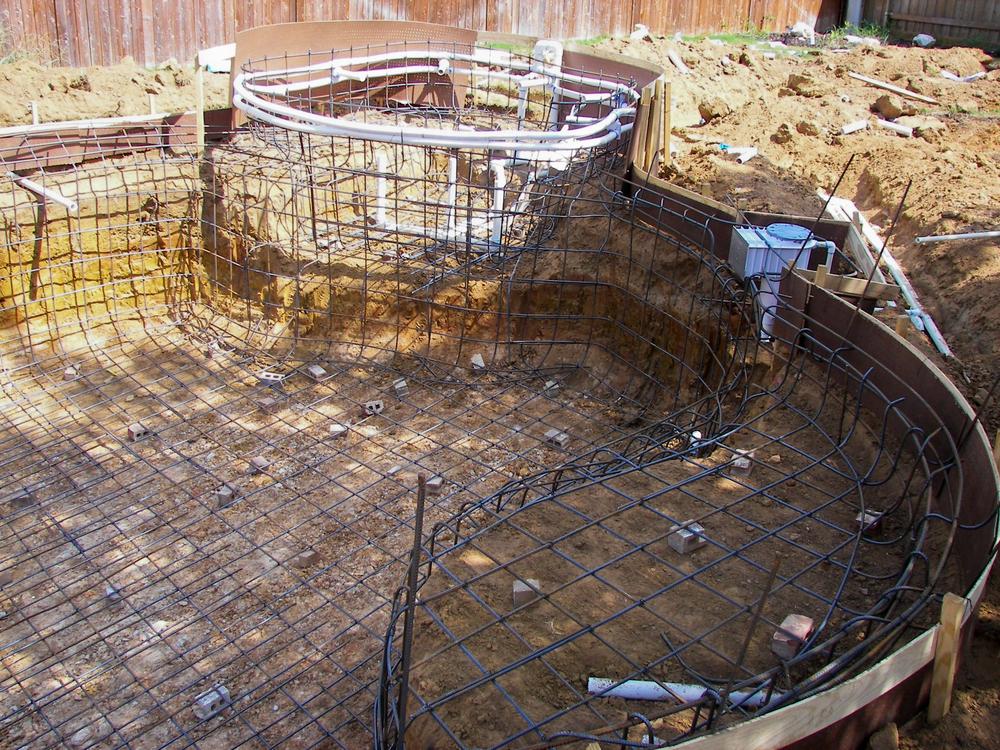
With the excavation complete, the project begins taking on its permanent structure. Steel reinforcement is installed first, creating the framework that gives the shell its strength and long-term structural integrity.
After the steel is secured, crews install plumbing lines that will circulate water through pumps, filters, and optional features like spas or waterfalls. At the same time, electricians place electrical conduits, bonding systems, lighting, and other electrical components that will power your equipment safely.
Pressure testing the plumbing before concrete is applied is a critical step. Finding a small leak now is far easier than repairing one after the shell has hardened.
Municipal inspectors often visit during this phase to verify that the structural work, plumbing, and electrical installations meet current building codes before the project can move forward.
Gunite Application & Curing (7–10 Days)
For a concrete pool, the shell is created by spraying gunite or shotcrete over the steel framework. This forms the permanent structure of your swimming pool.
Many homeowners assume construction speeds up once the shell is in place, but curing is intentionally slow. Concrete continues gaining strength over time, and allowing it to cure properly helps reduce future cracking and improve long-term durability.
During this period, crews may recommend lightly wetting the shell each day to support proper curing, especially during Florida’s hot, dry weather. It may seem like little is happening, but the shell is becoming stronger with every passing day.
Trying to rush this stage rarely saves meaningful time and can compromise the quality of the finished structure.
Tile, Coping, Decking & Finishes (2–3 Weeks)
Once the shell has cured, your backyard starts looking much closer to the finished product. Decorative elements begin replacing construction materials, and the overall design finally comes together.
During this stage, crews typically install:
Waterline tile
Tile coping
The surrounding pool deck
Pavers, travertine, or other decking surfaces
Equipment pads
Drainage features
If your project includes screen enclosures, outdoor kitchens, or covered patios, scheduling between multiple contractors becomes especially important. Coordinating these trades early helps prevent one contractor from delaying another.
Material availability can also influence this phase. Specialty stone, imported tile, or custom decking materials occasionally require longer lead times, particularly during busy construction seasons.
By the end of this stage, your outdoor living area begins resembling the finished vision you approved during design.
Interior Finish, Startup & Final Inspection (About 1 Week)
The last step is where the project truly comes to life. Your chosen interior finish, whether plaster or a premium pebble finish, is carefully applied to the shell before the pool is filled with water.
After filling, technicians balance the water chemistry, start the equipment, verify proper circulation, and ensure every system operates as intended. Pumps, lighting, heaters, automation, and sanitation equipment are all tested before turnover.
The project then moves through the final inspection, where local officials confirm that safety barriers, equipment, plumbing, electrical systems, and other required elements meet code.
Once inspections are complete, your contractor walks you through operating the equipment, maintaining water quality, and caring for your new pool. The construction site transforms into the backyard retreat you envisioned months earlier, marking the official completion of your project.
Why Pool Construction Takes Longer During Florida’s Rainy Season
If you’re planning to build a pool in Florida, the time of year can have a noticeable impact on your schedule. Summer is one of the busiest construction seasons, but it also brings the greatest risk of weather-related interruptions.
From roughly June through September, heavy afternoon storms are common across much of the state. A crew may start work under clear skies only to stop a few hours later because the excavation has filled with water or lightning has made the site unsafe. Even after the rain stops, saturated soil often needs time to dry before equipment can safely return.
Certain stages are more sensitive to weather than others. Excavation, steel installation, and concrete application all depend on stable site conditions. While experienced contractors build flexibility into the schedule, repeated storms can still add several days to the overall timeline.
Hurricane season also deserves consideration, particularly if you live near Sarasota, Bradenton, Naples, Fort Myers, Cape Coral, or Punta Gorda. Contractors closely monitor tropical systems, and work may pause to secure materials, protect the job site, and keep crews safe.
Starting your project during the cooler months does not guarantee a faster completion, but it often provides more predictable working conditions. Winter and early spring generally bring fewer weather interruptions, making it easier for inspections, deliveries, and construction crews to stay on schedule.
The best time to start is often before peak demand arrives. Planning early can improve scheduling and reduce delays caused by high demand for labor, inspections, and materials.
Tampa vs Orlando vs Sarasota: Why Your Pool Timeline Can Be Different
You may wonder why a neighbor in another city finished their pool weeks before yours. The answer often comes down to local conditions rather than construction quality.
Every municipality manages its own review process, inspection schedule, and permit workload. As a result, two nearly identical pools can have different completion dates simply because they are being built in different parts of Florida.
Area | Common Timeline Considerations |
Tampa | Higher permit activity, redevelopment projects, and inspection demand can extend review times during busy seasons. Homeowners planning a project can better understand local expectations by working with experienced pool builders in Tampa. |
Orlando | Master-planned communities often require HOA approval before permits are submitted, adding another layer to the schedule. Experienced pool builders in Orlando are familiar with these additional approval requirements. |
Sarasota | Many custom luxury pools include upgraded finishes and outdoor entertainment areas that naturally require additional construction time. Choosing knowledgeable Sarasota pool builders helps set realistic expectations for these more customized projects. |
Beyond permitting, local site conditions also influence scheduling.
Homes near the Gulf Coast may require additional drainage planning because of higher groundwater levels. Inland communities can encounter limestone or compacted soil that slows excavation. Established neighborhoods sometimes present access challenges if heavy equipment has limited space to reach the backyard.
These differences are exactly why working with an experienced local contractor matters.
A builder who understands local permitting offices, inspection procedures, and regional construction challenges can often identify potential delays before they affect your project.
Pool Construction Near You: Does the Builder You Choose Affect the Timeline?
The short answer is yes. The builder you hire can influence nearly every stage of the project.
While no contractor can control the weather or municipal permit offices, experienced pool builders know how to prepare for them. They submit complete permit packages, coordinate subcontractors in advance, schedule inspections efficiently, and communicate clearly throughout the project.
You should also look beyond advertised completion times. Ask whether the proposed schedule includes design, permits, inspections, startup, and final walkthrough, or only the active construction period.
A reliable contractor should be able to explain:
What happens before excavation starts?
Which milestones depend on inspections?
How weather delays are handled.
Who communicates schedule updates?
What happens if materials arrive later than expected?
Clear expectations at the beginning usually lead to a smoother project from start to finish.
Gunite vs Fiberglass: Which Pool Gets Finished Faster?
If your priority is the shortest possible schedule, fiberglass pools generally install faster than gunite pools. However, speed is only one part of the decision.
Feature | Fiberglass | Gunite (Concrete) |
Installation | Usually faster | Longer construction schedule |
Shape options | Factory molds | Fully custom designs |
Water features | Limited | Excellent for custom features |
Long-term customization | Moderate | Nearly unlimited |
Surface options | Factory finish | Multiple interior finish choices |
Fiberglass shells arrive ready to install, allowing contractors to complete much of the work in a relatively short period once permits are approved.
A concrete pool takes longer because it is built entirely on-site. Steel reinforcement, gunite application, curing, tile installation, decking, and interior finishes all happen in sequence.
Although gunite requires more time, many Florida homeowners choose it because it offers greater design flexibility and blends seamlessly with custom outdoor spaces.
If you’re still comparing materials, read our guide on fiberglass vs concrete pools before deciding which option fits your property and lifestyle.
The best option comes down to your budget, design preferences, and how you expect to enjoy your pool over the long term.
How to Keep Your Florida Pool Project on Schedule
Some delays are unavoidable, but many can be prevented with careful planning before construction begins.
A few simple decisions can make a meaningful difference:
Finalize your design before engineering starts.
Submit complete HOA documents if approval is required.
Select tile, coping, decking, and equipment early.
Respond quickly when your contractor requests information.
Avoid making major design changes after permits are submitted.
Schedule your project before peak construction season if possible.
It also helps to think beyond the pool itself. Features such as patios, landscaping, screen enclosures, and outdoor kitchens should be coordinated early, so they fit naturally into the overall schedule instead of becoming last-minute additions.
Staying involved throughout the project keeps small issues from becoming major delays. Regular communication allows everyone to make informed decisions before they affect the next phase of construction.
Questions to Ask a Florida Pool Builder Before Signing a Contract
Before choosing a contractor, ask questions that reveal how they manage projects instead of focusing only on price.
Consider asking:
Does the proposed timeline include design, permitting, construction, and inspections?
Who prepares and submits permit applications?
Will you assist with HOA approvals if needed?
How do you communicate weather or scheduling changes?
What construction milestones trigger payments?
Who schedules inspections with the local building department?
How do you handle unexpected site conditions?
What happens if materials are delayed?
The answers often tell you more about the contractor than the estimated completion date.
Learn more about working with a licensed Florida pool builder and understand the Florida pool construction permit process before starting your project.
Choosing a contractor with organized project management and transparent communication usually leads to a smoother experience from design through completion.
Planning a Pool in Florida? Start With a Realistic Timeline
If you now have a better idea of how long does it take to build a pool, you are already in a stronger position than many homeowners beginning the process.
Most projects follow a similar path. Design generally takes one to three weeks. HOA approval, if required, may add another two to eight weeks. Permitting often requires two to six weeks, followed by approximately eight to twelve weeks of active construction for a custom gunite pool. From contract signing to the day your pool is ready to enjoy, planning for three to six months is usually the most realistic expectation.
No two projects follow exactly the same schedule. Weather, permitting, site conditions, and design choices all influence the final completion date. What matters most is working with a contractor who explains the process honestly and prepares for potential challenges instead of making unrealistic promises.
At Creative Pool & Spa, every project begins with a clear plan, realistic scheduling, and local expertise built around Florida’s unique construction environment. Whether you’re creating a simple backyard retreat or a fully customized outdoor living space, you’ll have a team that understands the permitting process, regional building requirements, and every stage of the journey from concept to completion.