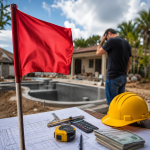
Most homeowners think the biggest challenge in building a pool is choosing the design, finding the right builder, or managing the budget.
The surprise usually comes before the first shovel ever hits the ground.
A missing survey. An HOA approval that takes longer than expected. A setback issue was discovered during review. One small problem can leave a project sitting in limbo while summer arrives and the backyard still looks exactly the same.
The reality is that a Florida pool construction permit often determines how quickly construction moves forward. A well-prepared application can keep a project on schedule. A rushed submission can create weeks or even months of avoidable delays.
Before investing in new pool construction, it helps to understand how the permit system works, what paperwork is required, and what causes the biggest bottlenecks across Florida. This guide explains how the permit process works, where projects commonly get stuck, and what steps can help prevent unnecessary delays.
Key Takeaways
|
Why Does Florida Require Pool Permits?
A pool permit is required because Florida treats residential pools as structural, electrical, plumbing, and safety-regulated construction projects.
The average homeowner sees a backyard pool. The local building department sees excavation, electrical systems, water circulation equipment, drainage concerns, safety barriers, and compliance with the Florida Building Code. Every part of the project must meet minimum safety standards before construction can move forward.
Consider a property in Sarasota County located near a drainage easement. The pool design may look perfect on paper, but if it interferes with drainage infrastructure, the project may require revisions before approval. Similar challenges happen in Tampa neighborhoods with smaller lots and tighter setback requirements.
Permit review helps identify those issues before concrete is poured. Fixing a design during review is far easier than relocating a partially built pool after construction begins.
What Is Required Before a Florida Pool Construction Permit Can Be Submitted?
A complete Florida pool construction permit application requires several documents before the review process can begin.
Many permit delays occur because homeowners assume the builder can submit plans immediately. In reality, most jurisdictions require detailed documentation before accepting an application.
Typical required documents include:
Property survey or site plan
Engineered pool drawings
Utility and easement verification
Contractor licensing information
Product specifications for pool equipment
HOA approval documents, when applicable
Permit application forms
Notice of Commencement when required
A Florida licensed professional engineer typically prepares or reviews structural components to verify that the proposed pool shell can withstand local soil conditions and groundwater pressure.
Imagine a homeowner in Naples who wants a large custom pool and spa. If the survey reveals a utility easement running through the desired location, the design may need revisions before permit review even starts.
Completing documentation early keeps the application process moving smoothly and reduces the chance of expensive redesigns.
What Are the Florida Pool Permit Requirements for Residential Pools?
The Florida pool permit requirements for residential projects generally include structural review, electrical review, plumbing review, and safety compliance review.
Every county and municipality has its own procedures, but the core requirements remain similar throughout the state.
Most reviews focus on:
Review Category | Purpose |
Structural Review | Confirms pool design meets engineering requirements |
Plumbing Review | Evaluates circulation and filtration systems |
Electrical Review | Reviews bonding, grounding, and electrical components |
Safety Review | Verifies barriers and child safety measures |
Zoning Review | Checks setbacks and property line compliance |
A project in Orange County may move through a slightly different review process than one in Sarasota County or Hillsborough County. Local departments still evaluate many of the same safety and engineering concerns.
The goal is simple. Ensure compliance before construction starts rather than correcting violations after installation.
The Florida Pool Construction Permit Process Step by Step
The Florida pool construction permit process follows a predictable sequence, even though review times vary by municipality. Understanding each stage helps set realistic expectations before construction begins.
Site Survey and Property Review
The first step is verifying where the pool can legally be built. Surveyors identify property lines, easements, setbacks, drainage features, and existing structures. Local zoning regulations determine how close the pool can sit to fences, homes, utilities, and neighboring properties.
A homeowner in Tampa may discover that available yard space is smaller than expected once setback requirements are applied. The earlier those limitations are identified, the easier it becomes to create a workable design.
Engineering and Pool Plans
Engineered plans translate ideas into buildable construction documents. These engineered plans show excavation depth, structural specifications, plumbing layouts, electrical components, and equipment placement. The plans must demonstrate compliance with applicable building code requirements.
For larger pool and spa projects, engineering review becomes even more important because of additional structural loads and equipment requirements. Accurate plans reduce corrections later in the review process.
Permit Submission and Plan Review
The next step is permit submission. The county building department reviews submitted documents for compliance with local building codes, zoning requirements, engineering standards, and applicable Florida statutes.
Some applications receive approval quickly. Others receive requests for clarification or revisions. A missing document can stop the review clock entirely. Submitting a complete package from the beginning often saves weeks of frustration.
Permit Approval
A permit becomes eligible for issuance once all review comments are resolved. Receiving permit approval does not mean construction is complete. It simply authorizes the project to move forward under approved plans.
At this stage, the pool permit approved status allows contractors to schedule excavation and begin construction activities. The hardest part should be behind you. Unfortunately, many delays happen before reaching this milestone.
Construction and Inspections
Once construction begins, inspections occur throughout the project.
Common inspections include:
Excavation inspection
Steel inspection
Plumbing work inspection
Electrical work inspection
Deck and barrier inspection
Final inspection
Each inspection verifies that construction matches approved plans. Passing inspections keeps the project moving. Failed inspections create additional scheduling delays and rework costs.
What Delays Pool Construction the Most in Florida?
The biggest permit delays usually come from incomplete paperwork, property restrictions, and preventable review issues.
Many homeowners assume the delay happens inside the building department. In reality, a large percentage of setbacks happen before the application ever reaches final review. Missing documentation, easement conflicts, HOA approvals, and design revisions are often responsible for the longest waits.
A family in Orlando might spend weeks selecting finishes and finalizing a pool design, only to discover the homeowners’ association requires a separate architectural review before construction can begin. Meanwhile, a homeowner in Sarasota could have a completed design but run into problems because the proposed pool location conflicts with a utility easement.
Understanding these common obstacles can save both time and frustration.
HOA Approval Problems
HOA approval is one of the most overlooked causes of delay. Many communities throughout Naples, Orlando, and Tampa require separate approval before a permit application can move forward. Some associations review applications monthly rather than weekly.
A homeowner may assume permit review starts immediately after signing a contract. Instead, the project could sit waiting for HOA authorization before submission even begins. This is especially common in master-planned communities around Orlando, where design guidelines can add another layer of review before permits are submitted. Homeowners planning to work with pool builders in Orlando should ask how HOA approvals are handled before construction planning begins. Securing approval early helps prevent unnecessary delays.
Missing Surveys and Site Plans
A missing or outdated survey can stop a project before review starts. Building officials need accurate property information to verify setbacks, easements, and compliance with local ordinances. Without a current site plan, reviewers cannot determine whether the proposed location satisfies zoning requirements.
Imagine purchasing an older home in Hillsborough County where the original survey no longer reflects improvements made over time. A new survey may be required before review can continue. Accurate documentation keeps the project moving forward.
Easements and Property Line Conflicts
Easement conflicts frequently create redesign requests. Utility companies, drainage authorities, and municipalities often maintain protected areas that cannot be obstructed by permanent structures. Pools constructed inside these areas may be rejected during review.
A homeowner in Sarasota County may have plenty of backyard space, yet only a portion of it may actually be available for construction once easements are considered. Identifying restrictions before finalizing plans helps avoid expensive redesign work.
Plan Review Corrections
Plan review corrections are common, even with experienced builders. Reviewers may request additional engineering details, equipment specifications, safety information, or clarification regarding code compliance. Every correction requires resubmittal and another review cycle.
A small omission involving electrical wiring or equipment placement can delay approval far longer than most homeowners expect. Thorough submissions often move through the process much faster.
Failed Inspections
Failed inspections create delays after construction starts. Inspectors verify that work matches approved plans and complies with applicable safety standards. If deficiencies are discovered, corrections must be completed before the next phase can proceed.
Examples include:
Improper bonding of metal components
Incorrect placement of pool equipment
Missing safety features
Non-compliant electrical installations
Barrier deficiencies
Passing inspections the first time keeps construction on schedule and helps avoid unnecessary costs.
What Safety Features Does Florida Require for New Pools?
Florida requires approved safety measures to help prevent accidental access to residential pools.
Under Florida law, most new residential pools must include at least one approved safety feature designed to reduce the risk of unsupervised child entry into the pool area.
Common safety requirements include:
Safety Feature | Requirement |
Safety barriers | Minimum 48-inch height |
Pool barriers | Maximum allowable openings and clearance limits |
Gates | Self closing and self-latching |
Door Alarms | Required in certain configurations |
Pool cover | Approved safety cover options available |
A homeowner in Naples with a screened lanai may still need to satisfy additional barrier requirements depending on the home’s layout and access points. The purpose is simple. Florida requires multiple layers of protection because drowning prevention remains one of the most important aspects of pool ownership.
Why Gate and Barrier Compliance Matters
Proper gate design is more important than many homeowners realize. Reviewers carefully examine gate specifications, latch placement, barrier height, and opening direction. Gates must generally open away from the pool area and include approved self-latching hardware.
A beautiful custom enclosure can still fail inspection if the gate does not satisfy code requirements. Meeting these requirements from the beginning helps avoid costly corrections later.
Safety Features Go Beyond Fences
Pool safety involves more than perimeter fencing. Modern projects often include:
Door alarms
Approved pool enclosures
Child-resistant access controls
Compliant entrapment protection systems
Properly designed main drain configurations
A pool that satisfies safety review is easier to insure, easier to maintain, and safer for family members and guests.
How Long Does Permit Approval Take in Florida?
Most permit approvals take several weeks, although timelines vary significantly between jurisdictions.
Many factors influence review speed. Application completeness, project complexity, seasonal demand, staffing levels, and correction requests all play a role.
Typical timelines often look like this:
Project Type | Typical Review Time |
Standard Residential Pool | Several weeks |
Custom Pool and Spa Project | Longer review period |
HOA Community Project | Additional approval time |
Projects Requiring Revisions | Extended review period |
A straightforward project in Orange County may move faster than a heavily customized waterfront project in Naples. Likewise, a simple backyard installation may experience fewer delays than a luxury pool requiring extensive engineering review.
The fastest approvals usually come from complete applications submitted by experienced professionals.
The Hidden Permit Issue Most Homeowners Never Ask About
Access and buildability are often bigger problems than permitting itself.
Many homeowners focus entirely on design. They choose tile, shape, depth, and features. Then they discover the construction equipment cannot reach the backyard efficiently.
A project may satisfy every zoning requirement and still become more expensive because excavation equipment has limited access.
In older Tampa neighborhoods, narrow side yards can complicate excavation. In parts of South Florida, drainage concerns and groundwater conditions may require additional planning. In Sarasota, mature landscaping sometimes creates access challenges that homeowners never anticipated.
Experienced builders evaluate access early because construction logistics directly affect the timeline and cost. Ignoring site conditions can create delays long after permits are approved.
Why the Right Pool Builder Matters Before Permit Submission
The right pool contractor helps prevent problems long before construction starts.
Many homeowners compare builders primarily by price. Yet permitting, engineering coordination, inspections, and documentation management often have a greater impact on the overall experience than a small difference in contract value.
A qualified licensed contractor understands local review expectations, common correction requests, and jurisdiction-specific requirements. They know how to coordinate surveys, engineering, permits, and inspections efficiently.
If you’re evaluating a pool builder in Sarasota, understanding how builders manage permitting can be just as important as reviewing their design portfolio.
Similarly, homeowners researching the best pool company in Naples should pay close attention to permitting experience, especially for custom projects involving waterfront properties, luxury features, or HOA review.
A knowledgeable builder reduces stress because fewer surprises appear during review and construction.
What Happens After the Permit Is Approved?
Construction begins once the permit is issued and scheduling is finalized.
Most projects follow a sequence similar to:
Layout and staking
Excavation
Steel installation
Plumbing installation
Electrical installation
Gunite or shell construction
Deck installation
Equipment setup
Final inspections
Many homeowners are surprised to learn that permitting represents only one phase of the overall project. Construction, inspections, weather conditions, and material availability can all influence the final timeline.
If you’re also researching the cost to build a pool in Tampa, understanding the construction process helps explain why project budgets can vary significantly from one property to another.
Permit approval opens the door to construction. Proper planning helps ensure the project keeps moving once work begins.
Building a Pool Should Not Feel Like a Permit Nightmare

The permit process exists to protect homeowners, verify safety compliance, and ensure pools are built correctly.
A properly managed Florida pool construction permit should feel like a checkpoint, not an obstacle. Most delays happen because of incomplete documentation, property restrictions, engineering revisions, or inexperienced project management.
Whether you’re planning a new pool, a custom pool and spa, or a large backyard transformation, preparation matters. Understanding permit requirements before submitting plans can save weeks of delays and prevent expensive surprises later.
Creative Pool & Spa helps homeowners navigate every stage of new pool construction, from design and engineering to permitting and final inspections. A well-planned project starts with accurate information, complete documentation, and a team that understands how Florida’s permitting system actually works.
The smoother the permit process, the sooner the backyard starts looking like the project you imagined from the beginning.